FEMA Reform and Federal Disaster Policy
What should the federal government do before and after disasters, and how can we tell whether a reform improves outcomes?
Daniel Kaniewski, Ph.D.
A governor asking for help after a disaster needs to know what the federal government can deliver, who can commit it and when it will arrive. Those are decisions a reform has to improve.
I served on the White House staff during Hurricane Katrina and later co-authored the federal review of the response. At FEMA, I served as Deputy Administrator and became the agency’s first Deputy Administrator for Resilience. Between those assignments, I studied how officials learned from Katrina. Whether I was evaluating a reform or responsible for implementing it, I kept coming back to one question. Once leaders agree that something must change, who has the authority and resources to carry it out?
Give the work before a disaster an institutional home
At FEMA, I established FEMA Resilience to bring preparedness, hazard mitigation and flood insurance under one organization. A community deciding how to protect a flood-prone neighborhood has to consider all three. An exercise can reveal which roads will be cut off. A mitigation project can reduce the damage. Insurance can finance recovery from the losses that remain. Bringing those responsibilities together gave the agency a way to address the same risk with communities before the water rose.
Implementing the Disaster Recovery Reform Act of 2018 illustrates the difference between an authority and a result. Congress provided a funding mechanism for pre-disaster mitigation. In 2019 I testified about our work to design Building Resilient Infrastructure and Communities. Years later, GAO tracked the gap between selections and awards. For a local official, the milestones that matter are knowing when funds are available, getting work under contract and seeing the project protect people or property.
What counts as a lesson learned?
After Katrina, our White House review documented federal failures and Congress enacted the Post-Katrina Emergency Management Reform Act. When I returned to the subject in my doctoral research, a written recommendation was only a starting point. Officials could recognize a failure and still draw different conclusions about what to change. I look for evidence such as a revised assignment, a funded capability or an exercise that shows a team can now do something it could not do before.
Decide who can actually deliver
The Stafford Act declaration process recognizes that some events exceed state and local capabilities. Governors and tribal chief executives can request a major disaster declaration. Local officials know their communities, neighboring jurisdictions can supply mutual aid, and federal agencies can bring specialized capabilities and resources at national scale. Moving responsibility changes the outcome only if the receiving jurisdiction has the people, resources and authority to do the work.
The same question arises outside hurricanes and floods. In an April 2020 NPR interview, I described what FEMA could do to address immediate medical supply shortages while private supply chains adjusted. In a crisis, asking an agency to coordinate the work and asking it to take over distribution are very different assignments. Officials and suppliers need clarity about that division before demand outstrips supply.
Ask what the recovery rules reward
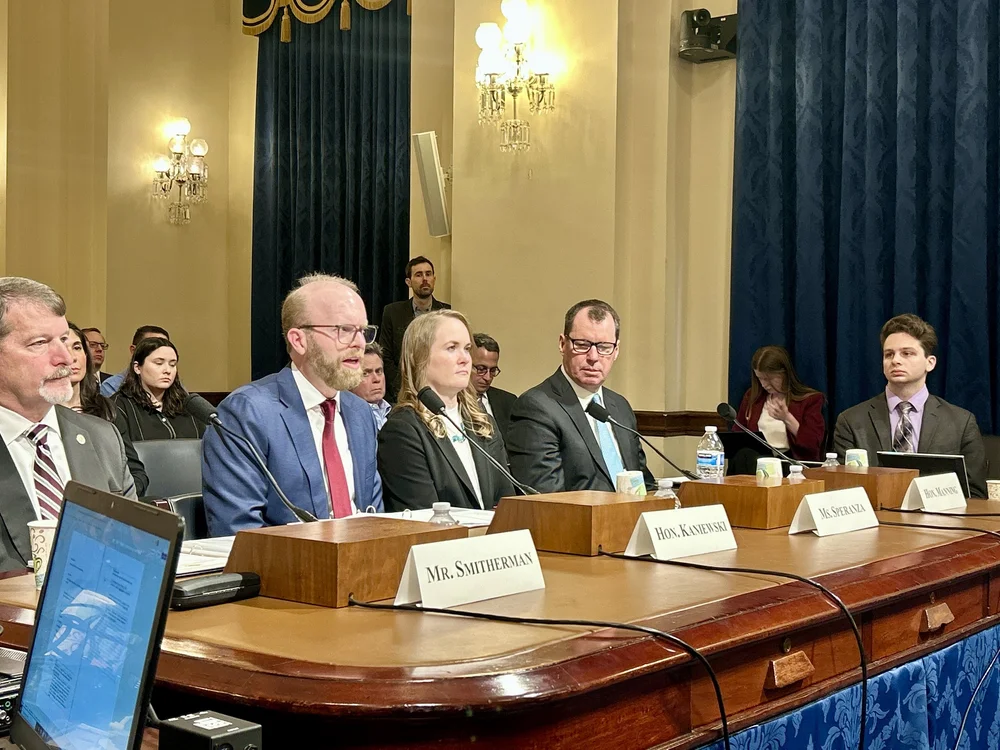
In my 2025 House testimony for Marsh McLennan, I asked Congress to consider FEMA’s role as an adviser on risk before disasters and how federal reimbursement shapes decisions afterward. A local government that insures a public building pays a premium every year. If it expects federal assistance to cover repairs after an uninsured loss, its budget process may reward postponing that expense. The consequence can be a larger bill for federal taxpayers and another vulnerable building.
The challenge is to help a community recover while giving its leaders a reason to reduce the next loss. That requires looking at what an official can do before an event, what the rules promise afterward, and whether smaller jurisdictions have a realistic way to act on the incentives.
A practical test for reform
When I assess a proposed change to FEMA, I ask four questions.
- Who is accountable before and after a declaration?
- Can that institution deliver when several disasters compete for its people and resources?
- Will survivors and communities receive the right help sooner?
- What evidence will show that less risk remains when the next disaster strikes?
The answers give Congress, governors and the public a way to judge a reform after the legislation passes or the new organization opens its doors.