Hazard Mitigation and Resilient Infrastructure
Reducing damage before disasters and restoring the services people and businesses depend on.
Daniel Kaniewski, Ph.D.
I witnessed firsthand the consequences of systemic infrastructure failures while serving at the White House during Hurricane Katrina in 2005 and at FEMA during Hurricane Maria in 2017.
During Katrina, failures of levees and floodwalls inundated New Orleans, triggering cascading failures across power, communications, transportation and other critical infrastructure systems. During Maria, the collapse of Puerto Rico’s electrical grid disrupted essential services across the island. The prolonged power outage impeded recovery for months.
Both disasters demonstrated the consequences of infrastructure interdependencies. The failure of one system can compromise the ability of others to function, magnifying disaster losses and delaying recovery.
These experiences underscored the importance of strengthening critical infrastructure before disasters and prioritizing its restoration afterward. Even a building that withstands a disaster may be unusable if the infrastructure on which its occupants depend has failed. Resilience requires us to consider how interconnected systems withstand hazards and how quickly they can be restored.
White House review of Hurricane Katrina · FEMA’s 2017 hurricane season after-action report · GAO’s review of electrical service restoration in Puerto Rico
Reduce physical damage before a disaster
Sound construction reduces the damage that can set other failures in motion. In Governing, I traced Florida’s statewide building code to Hurricane Andrew, which exposed weaknesses in a patchwork of local requirements and enforcement. Florida adopted a common statewide standard, set a regular update cycle and made local enforcement part of the system. It also provided a transparent way to amend the code and required independent testing of new products. State and local leaders can apply those principles to the hazards their own communities face. My building-code column in Governing
For existing properties, the right measure depends on the hazard and what can be changed. When I visited Beatrice, Nebraska, after the 2019 floods, I highlighted the community’s decision to buy out flood-prone homes along the Big Blue River. The city reduced its exposure by removing the homes from harm’s way. FEMA’s field video from Beatrice
As FEMA’s first Deputy Administrator for Resilience, I established and led FEMA Resilience, bringing the agency’s preparedness, hazard mitigation and flood insurance programs together under one organization. I oversaw FEMA’s hazard mitigation work as the agency developed Building Resilient Infrastructure and Communities under authority Congress provided in the Disaster Recovery Reform Act. In 2019, I briefed Congress on how FEMA planned to use that authority to invest before disasters, including an emphasis on protecting critical lifelines such as transportation and energy. The allocation of mitigation funding matters because the disruption caused by a vulnerable asset can extend well beyond its owner. Congressional witness biography · My 2019 congressional testimony
Plan for outages and prioritize restoration
The Katrina review I helped write documented how flooded equipment and power outages disabled pumping stations, making it harder to remove water from New Orleans. Puerto Rico faced a different set of failures after Maria. Damaged communications and roads made it hard to assess the condition of hospitals and water facilities. FEMA and Puerto Rican field leaders prioritized temporary power, water and wastewater service, and health care. That experience shows why restoration priorities have to account for dependencies. A generator can keep a critical facility operating only as long as crews can reach it and fuel can be delivered. White House Katrina review · FEMA’s after-action report
In 2018, I told Congress that response plans too often assumed interruptions to power, communications and water would be brief. I urged responders to prepare for prolonged outages while governments and private operators worked to reduce damage to those systems. FEMA’s 2019 National Response Framework made stabilizing community lifelines a response priority and recognized that those services depend on one another. For a utility, local government or facility operator, the practical questions are which service to restore first, what it needs in order to restart, and who can supply it while permanent repairs are under way. My 2018 written testimony · FEMA’s 2019 National Response Framework
I had seen related problems on a smaller scale. In 2011, when a floodwall at Washington Harbour went undeployed, the resulting power outage closed my office several blocks away and disrupted a Metro station. I later wrote about the loss of a major power plant in Cyprus following a naval-base explosion and argued for a comprehensive emergency management program. In 2012, I told CBS that sustained power outages during a Washington-area heat wave had left residents without basic services for too long. In each case, disruption spread beyond the places where the damage occurred. Washington Harbour article summary · Cyprus article summary · CBS News coverage
Design for functional recovery
At a 2024 congressional briefing on earthquake and windstorm risk, I presented the community resilience section of a briefing developed with colleagues. I argued that design standards should account for lifeline infrastructure alongside buildings. FEMA and NIST had proposed recovery-based performance targets for new buildings, retrofits of existing buildings and the lifeline systems that serve them. NIBS congressional briefing packet, pp. 4–5 · FEMA–NIST recommendations on reoccupancy and functional recovery
A building may be safe to reenter before it can provide the services people rely on. Functional recovery asks how soon those services can resume. A health facility, for example, may need working water and reliable access as well as power. A recovery target for that facility is more useful when the utilities and agencies responsible for those services can plan around the same timeframe.
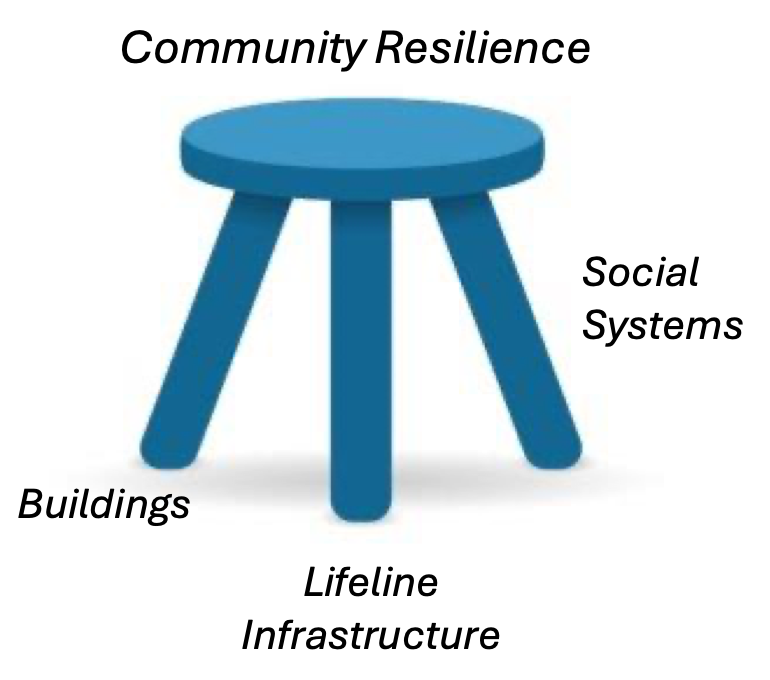
Lifeline infrastructure and community resilience. · National Institute of Building Sciences congressional briefing, March 2024 (p. 5)
Make business reopening part of economic recovery
When I spoke with Insurance Insider US in 2026, I pointed to a problem businesses can face even when their premises sustain little damage. They may have to wait for roads to reopen and for power and water to return. While businesses wait, employees lose work, customers lose services and suppliers lose orders. Restoration delays can deepen the economic consequences of a disaster well beyond the cost of repairing damaged property. Insurance Insider US reporting · Public summary and attributed quotation
For a business leader, I would start with one location and one essential operation. Which outside services must be working before it can reopen? How long can it operate without each one? Who controls restoration, and what can the business arrange with those operators in advance? Those answers can change which upgrades, backup arrangements and relationships deserve attention first.
Give the people who benefit a reason to invest
The organization that pays for a mitigation project may capture only part of its value. At FEMA, I saw how public funding could help communities make investments before a disaster. Leading Marsh’s U.S. public sector business, I saw how disaster losses affected property owners, insurers and governments differently. As chair of a committee at the National Institute of Building Sciences, I edited our Resilience Incentivization Roadmap 2.0. The project proposed certifying flood-resilience improvements and identified possible pilots, so owners and the organizations that benefit could see what protection an upgrade would provide. NIBS Resilience Incentivization Roadmap 2.0
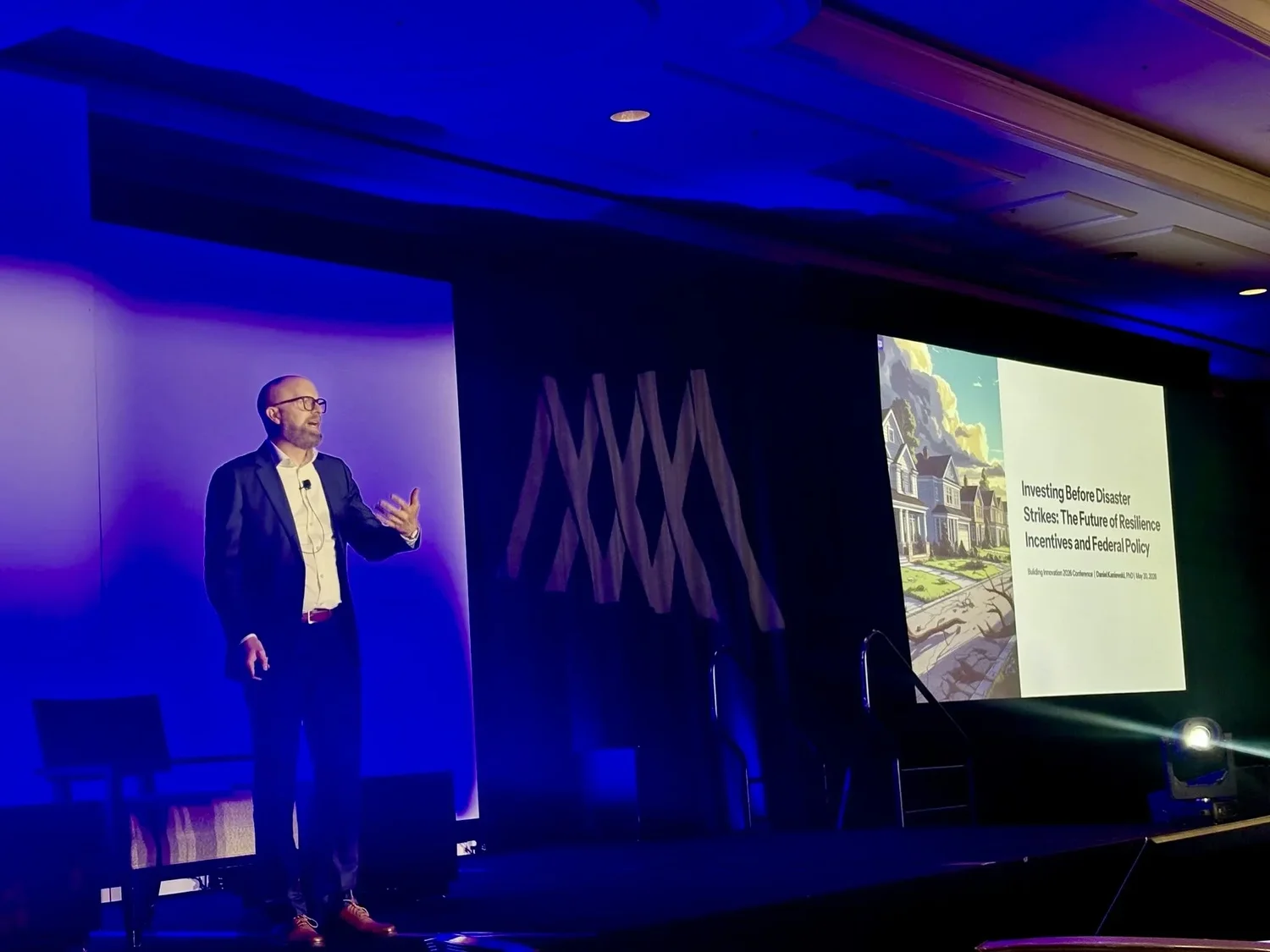
At Building Innovation 2026, I discussed how fewer insurance claims, lower risk of loan delinquency and reduced demands on government can give each institution a reason to help pay. I proposed that lenders consider low-cost financing for resilience upgrades. In my advisory work today, I bring that investment question back to performance. Identify the damage worth preventing, the service people need to regain, the time they can afford to be without it, and the parties that can help improve the outcome. Building Innovation 2026 keynote, discussion of who benefits and how they can contribute
Ultimately, resilience should be measured not only by the damage we prevent, but by the ability of communities and businesses to withstand disruption and recover. That requires looking beyond individual assets to the interconnected systems that support them, investing before disasters strike, and making the restoration of essential infrastructure a central priority afterward.
Related analysis
Disaster Insurance and Resilience Financing explores how the benefits of mitigation can help pay for it.
FEMA Reform and Federal Disaster Policy examines how federal authority, grants and recovery rules affect what communities do before and after disasters.