Emergency Management and Disaster Response
Building a culture of preparedness and translating disaster lessons into action.
Daniel Kaniewski, Ph.D.
Hurricane Katrina fundamentally shaped my approach to emergency management. Serving at the White House during the disaster, I witnessed the consequences of inadequate preparedness, fragmented coordination and insufficient capacity to respond to a catastrophic event. The experience reinforced how much effective response depends on the capabilities and relationships we build before a disaster.
Following Katrina, I helped write the White House review of the federal response, which produced 125 recommendations to improve our nation's preparedness and response capabilities. I subsequently led the White House team overseeing implementation of those recommendations. The review made building a national culture of preparedness an immediate priority alongside putting a National Preparedness System into practice. It called for governments, businesses, communities and individuals to share responsibility for readiness, and for agencies to connect planning and exercises to corrective action.
Homeland Security and National Preparedness traces how national goals assign responsibility for capabilities that several institutions must deliver together.
I carried that commitment forward when I joined FEMA in 2017. It continues to inform my approach to emergency management today. White House review, “Transforming National Preparedness”
Build a culture of preparedness
Preparedness is a shared responsibility. Individuals, families, businesses, community organizations and governments all have roles before, during and after disasters.
Building a culture of preparedness means making readiness part of everyday decisions. Households should understand their risks and prepare for potential disruptions. Businesses should anticipate how disasters could affect their employees, operations and supply chains. Governments should invest in capabilities, establish relationships with their partners and exercise those arrangements before they are needed.
FEMA made building a culture of preparedness the first goal of its 2018–2022 Strategic Plan, informed by the agency’s experience during the 2017 disasters. The plan tied helping people prepare to reducing risk, closing the insurance gap and learning from past disasters. I established and led FEMA Resilience, bringing preparedness, hazard mitigation and flood insurance together so FEMA could support those needs in the same organization. At the Atlantic Council, I discussed what shared responsibility meant in practice, including how FEMA could work more effectively with nonprofits that brought expertise and resources to relief operations. FEMA’s 2018–2022 Strategic Plan · Atlantic Council discussion
My 2018 interview on FEMA's goal of building a culture of preparedness
Translate lessons learned into lessons implemented
Disasters invariably generate lessons. The more difficult challenge is translating those lessons into meaningful and lasting changes.
My experience helping write the White House Katrina review and overseeing implementation of its recommendations gave me an appreciation for the difference between identifying a problem and correcting it. Recommendations require accountable leaders, institutional commitment, resources and sustained attention long after the immediate urgency of a disaster has subsided.
Following Katrina, FEMA's leadership implemented significant changes, while Congress enacted reforms that institutionalized many of the recommendations. In my 2009 congressional testimony, I credited FEMA Administrator David Paulison and Deputy Administrator Harvey Johnson for carrying changes forward and explained Congress’s role. One example was the requirement for FEMA to run a national exercise program and conduct regular national exercises. That gave agencies a continuing way to test preparedness, as the White House review had urged. GAO review of implementation
I subsequently examined institutional learning following Katrina in my doctoral research at George Washington University. My dissertation examined the White House review and DHS’s review of the National Response Plan. I found evidence of policy learning that varied in form and among officials. For me, the practical question is whether changes survive beyond the people who designed them and improve how agencies work when tested.
White House Katrina review · My 2009 congressional testimony · My doctoral research
President George W. Bush presents the White House review of the federal response to Hurricane Katrina, February 23, 2006. White House photo by Eric Draper.
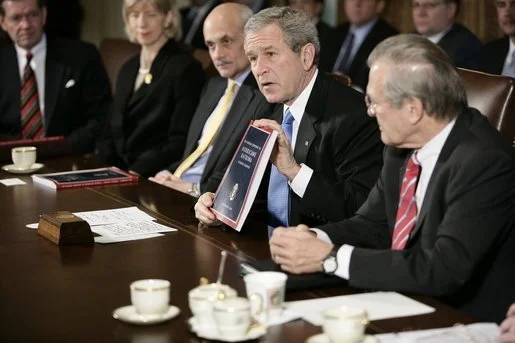
President George W. Bush presents the White House review of the federal response to Hurricane Katrina, February 23, 2006. White House photo by Eric Draper.
Prepare together before responding together
Effective disaster response depends on relationships, capabilities and coordination established long before an emergency.
The 2009 Washington Metro crash offered a practical example. Having begun my career as a firefighter and paramedic, I listened to the emergency radio traffic and recognized the benefits of years of regional preparedness investments. Responders from neighboring jurisdictions used a common radio channel, and area hospitals shared the patient load.
Many of these capabilities had been strengthened following the September 11 attacks. I saw their use during a transportation accident as evidence of the value of an all-hazards approach to preparedness. Investments made with one threat in mind can improve our ability to respond to many others.
The same principle applies to catastrophic disasters, where the scale and complexity of operations make advance coordination even more important.
My analysis of the Metro response in The Washington Post
Prepare for catastrophic and concurrent disasters
Emergency management organizations must plan for emergencies that place simultaneous demands on personnel, equipment and supplies.
I became FEMA's acting deputy administrator on the day Hurricane Maria made landfall in Puerto Rico in 2017. FEMA was already responding to Hurricanes Harvey and Irma and other disasters. Maria placed extraordinary additional demands on the agency and its partners.
The experience demonstrated why preparedness must account for the possibility that resources normally available for a disaster may already be committed elsewhere.
Following the 2017 hurricane season, FEMA strengthened its preparations, prepositioned additional personnel and supplies, and tested revised procedures in National Level Exercise 2018, which simulated a major hurricane in the Mid-Atlantic. These efforts included new approaches to engaging private-sector partners in disaster operations.
Exercises should expose weaknesses, challenge assumptions and identify where teams need additional capabilities. The work after the exercise matters too. Assign the corrections and test whether they work.
FEMA's 2017 hurricane season after-action report · My 2018 congressional testimony
Adapt leadership and coordination to the emergency
Effective emergency management requires clear responsibilities, but those responsibilities must also adapt as an incident evolves.
The COVID-19 pandemic demonstrated this challenge. In March 2020, after leaving FEMA, I argued that if the crisis escalated and a Stafford Act declaration was issued, FEMA should coordinate federal operations and logistics. The Department of Health and Human Services would lead health and medical operations, and the White House task force would set policy and strategy.
I also argued that an emergency of this magnitude required a whole-of-America response, drawing upon the capabilities of governments, businesses and communities.
By June, with hurricane season beginning, I advocated transitioning management of the ongoing pandemic response to HHS so FEMA could prepare for other disasters while continuing to finance state efforts.
The same principle guided both recommendations. Give responsibility to the organizations with the capabilities the current phase requires, and preserve the capacity to respond to other emergencies.
My March 2020 Politico op-ed · A Whole of America Response · My June 2020 BRINK article excerpt
Learn from the disasters that define us
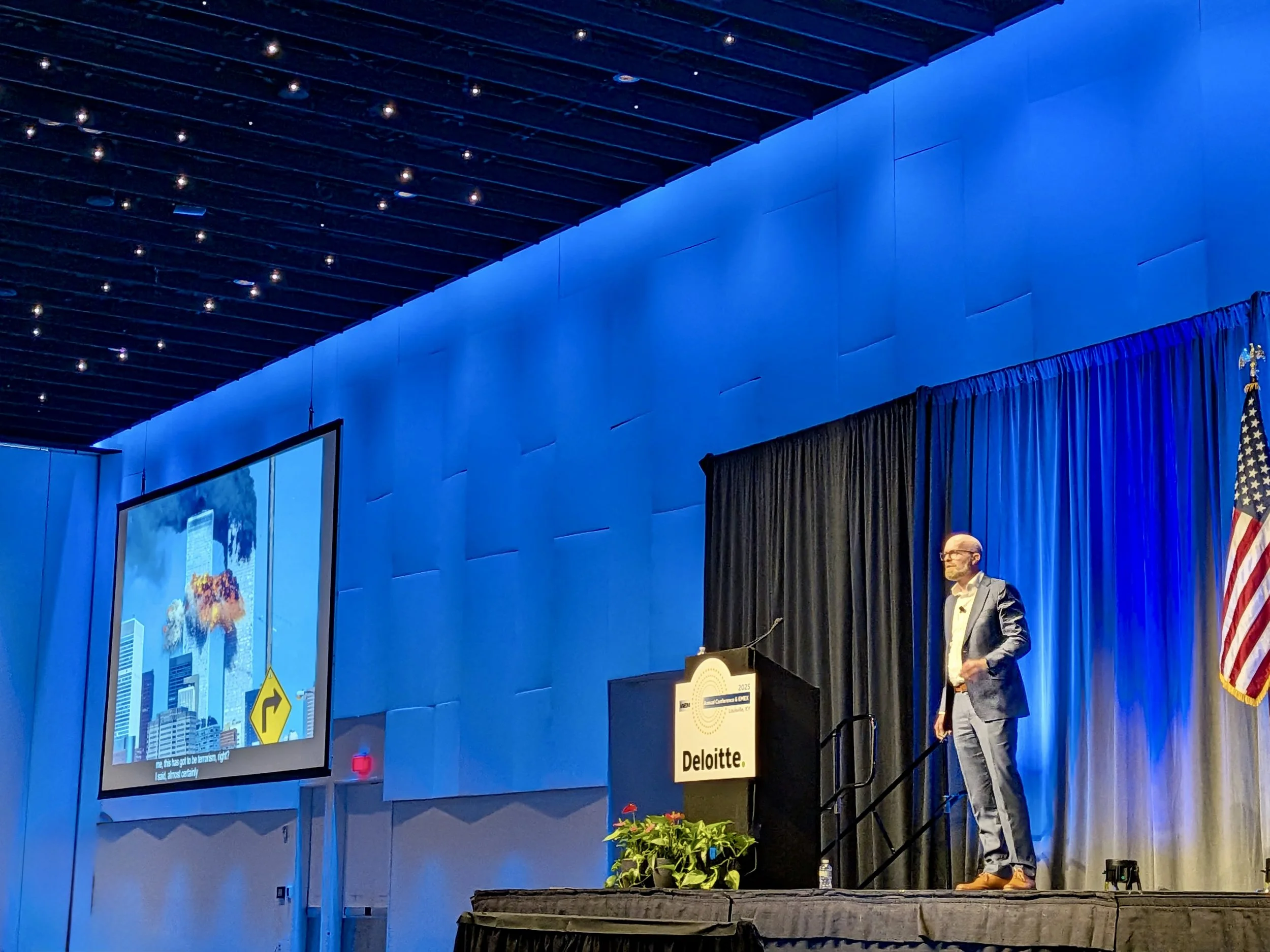
In my essay and keynote presentation, The Disasters That Define Us, I reflect on how my experiences during 9/11, Hurricane Katrina, Hurricane Maria and the COVID-19 pandemic shaped my perspective on emergency management.
Each disaster provides lessons, but our responsibility as emergency management professionals extends beyond documenting what happened. We must ensure that those lessons inform how we prepare, how we lead and how we work with our partners.
Ultimately, the measure of effective emergency management is not the number of plans we develop, exercises we conduct or recommendations we produce. It is whether those efforts improve our ability to protect lives, reduce suffering and help communities recover when the next disaster strikes.
That is what it means to build a culture of preparedness.
Read The Disasters That Define Us · IAEM plenary recap
Related analysis
FEMA Reform and Federal Disaster Policy traces the authorities and institutional changes behind federal preparedness and response.
Hazard Mitigation and Resilient Infrastructure examines reducing physical damage and restoring the services communities rely on.
Disaster Insurance and Resilience Financing examines how households, businesses and governments prepare financially and pay for recovery.